GPT-6 SOL · COMING SOON

High-performance frontier reasoning and cost-optimized coding intelligence

GPT-6 Sol API: Frontier Reasoning, Coding and Agent Workflows

GPT-6 Sol delivers OpenAI's next-generation frontier intelligence designed specifically for complex coding, multi-file refactoring, long-horizon agent loops, and professional production workflows. With a 1.05-million-token context window, 128K max output, and 50% price reduction compared to GPT-5.6 Sol, advanced reasoning is now practical for high-volume enterprise deployment.

Equipped with native Responses API tool orchestration, prompt caching discounts, and streaming, GPT-6 Sol will soon be accessible on PoYo through unified high-concurrency APIs—providing developers with scalable frontier intelligence without waitlists.

Key Features of GPT-6 Sol API

Explore GPT-6 Sol's core capabilities across software engineering, autonomous agent loops, 1.05M context, and configurable reasoning depth.

01

GPT-6 Sol for Repository-Scale Coding & Multi-File Refactoring

Traditional models struggle with multi-file dependencies, slow iteration loops, and token exhaustion when refactoring complex software repositories. GPT-6 Sol achieves a 68.8% benchmark score on DeepSWE v1.1 while delivering 2–3x faster token throughput and reducing token usage by 30–50% on equivalent tasks. Development teams can accelerate multi-file migrations, automate architectural refactoring, and resolve intricate bugs with consistent architectural fidelity.

  • Achieve 68.8% on DeepSWE v1.1 at max effort
  • Process code with 2–3x faster token throughput
  • Reduce token consumption by 30–50% on complex tasks
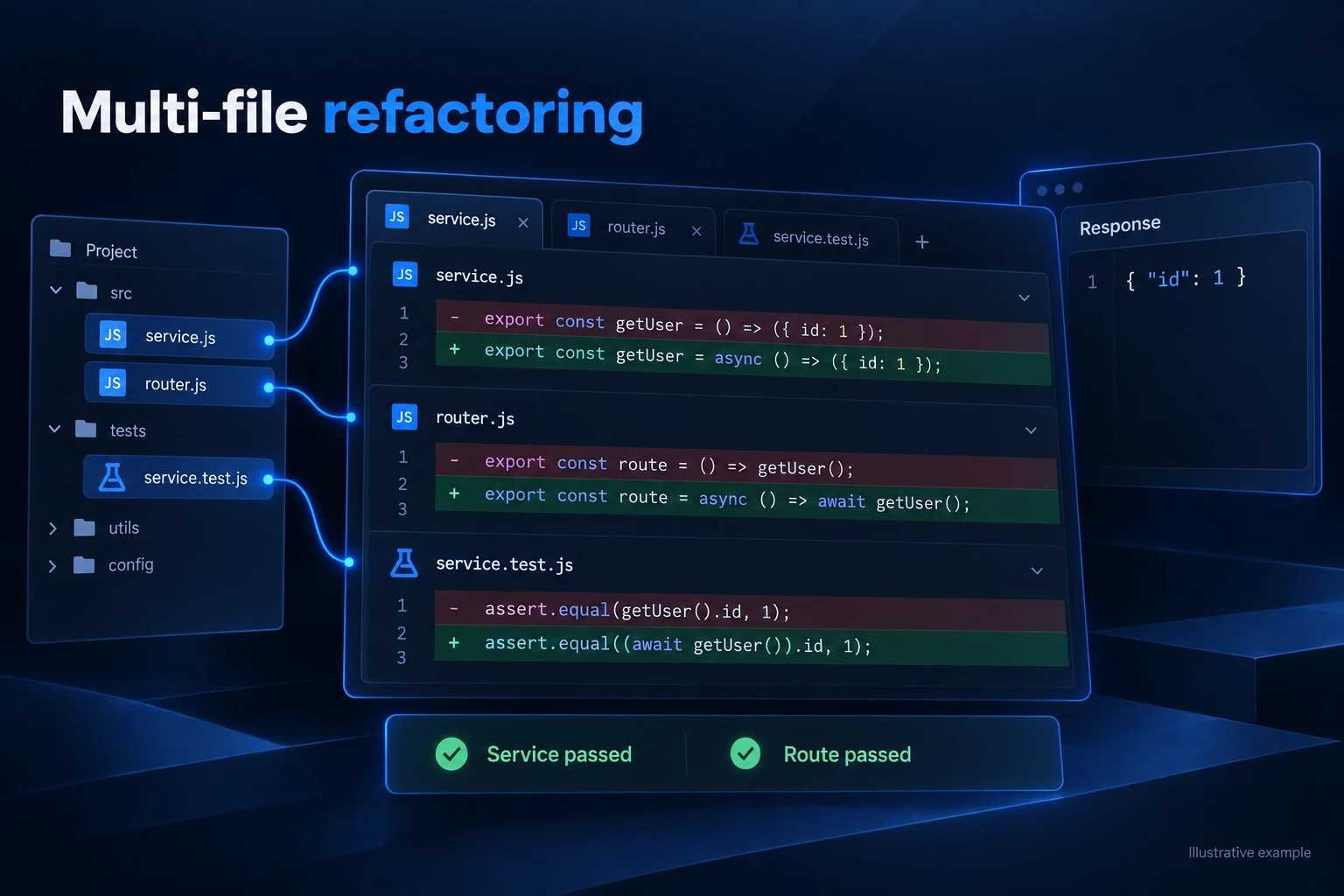
Linked source files with coordinated asynchronous refactoring, response output and passing example tests

02

GPT-6 Sol API for Autonomous Agents and Tool Workflows

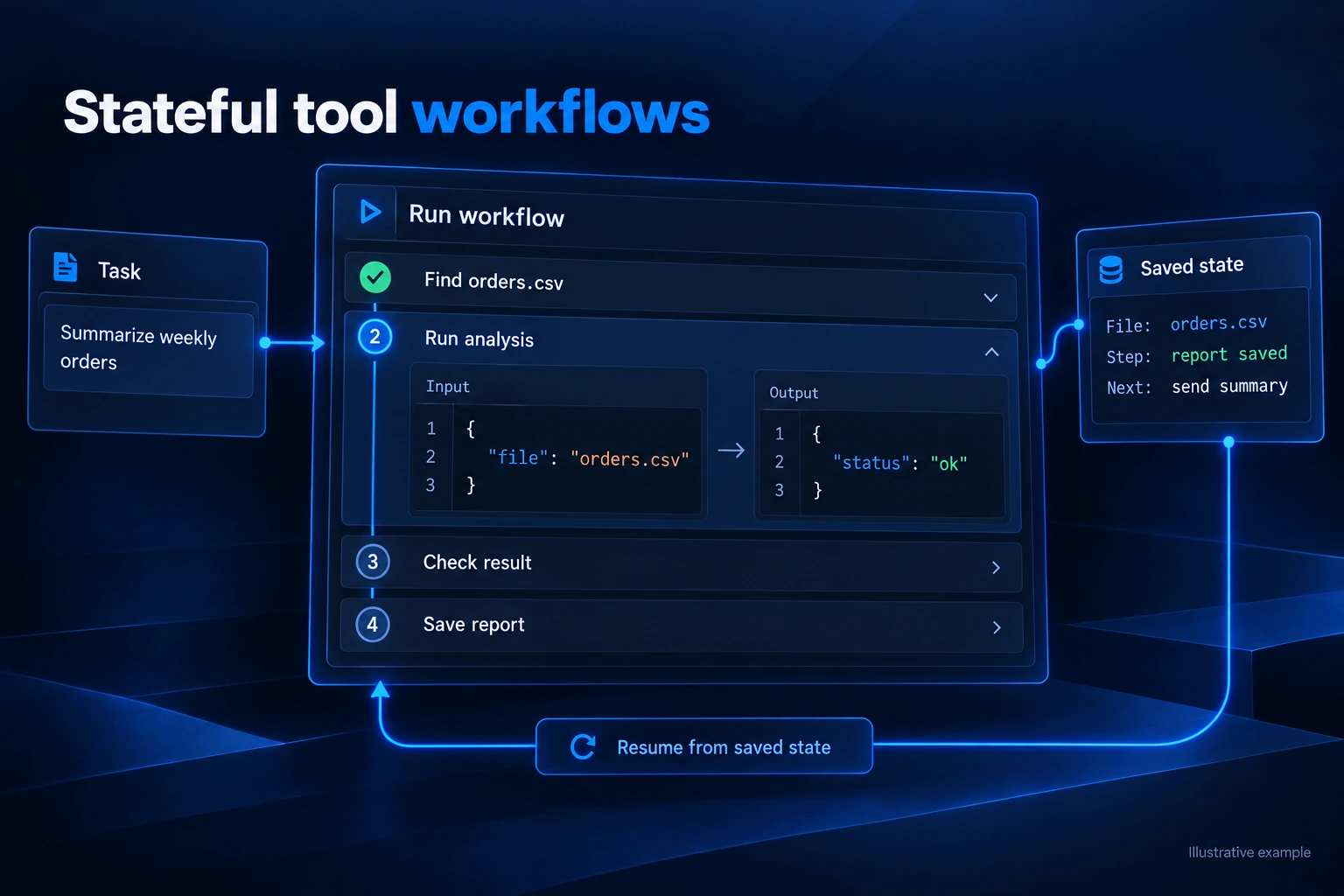
Multi-turn autonomous agents frequently fail when long operational sequences drift out of alignment, drop tool state, or hallucinate intermediate steps. GPT-6 Sol reaches 33.2% on AutomationBench and natively supports OpenAI's Responses API to persist conversational state, coordinate asynchronous tool calls, and execute reliable function searches. Developers can deploy self-healing, long-horizon agents that handle complex business operations with resilient multi-step execution.

  • Score 33.2% on AutomationBench at xhigh effort
  • Persist agent execution state with the Responses API
  • Orchestrate async tool calls and structured function outputs
A tool workflow retaining execution state across file lookup, analysis and saved results

03

GPT-6 Sol 1.05M Context Window and Multimodal Analysis

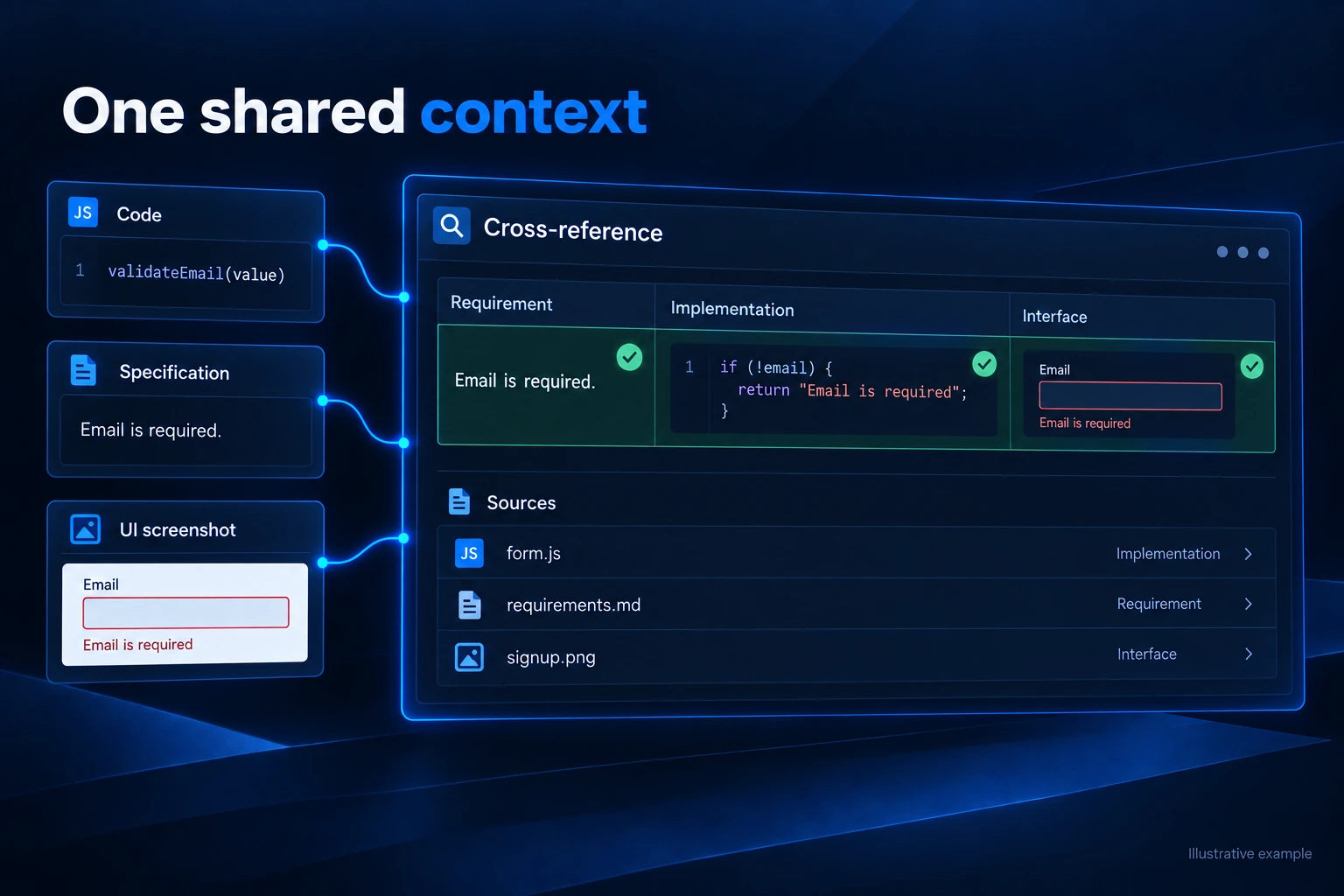
Processing extensive codebases, technical manuals, and visual diagrams through fractured chunking or retrieval pipelines often discards essential cross-document context. GPT-6 Sol combines a 1,050,000-token total context window with 128,000 maximum output tokens and native multimodal comprehension for text, images, and documents. Teams can reason across whole repositories, dense specifications, and visual interface screenshots simultaneously without complex RAG fragmentation.

  • Analyze up to 1,050,000 tokens in a single request
  • Generate up to 128,000 tokens for in-depth outputs
  • Synthesize text, documents, code, and UI screenshots seamlessly
Source code, a technical document and an interface screenshot combined into one cross-referenced analysis

04

Configurable Reasoning Depth with 50% Lower Error Rates

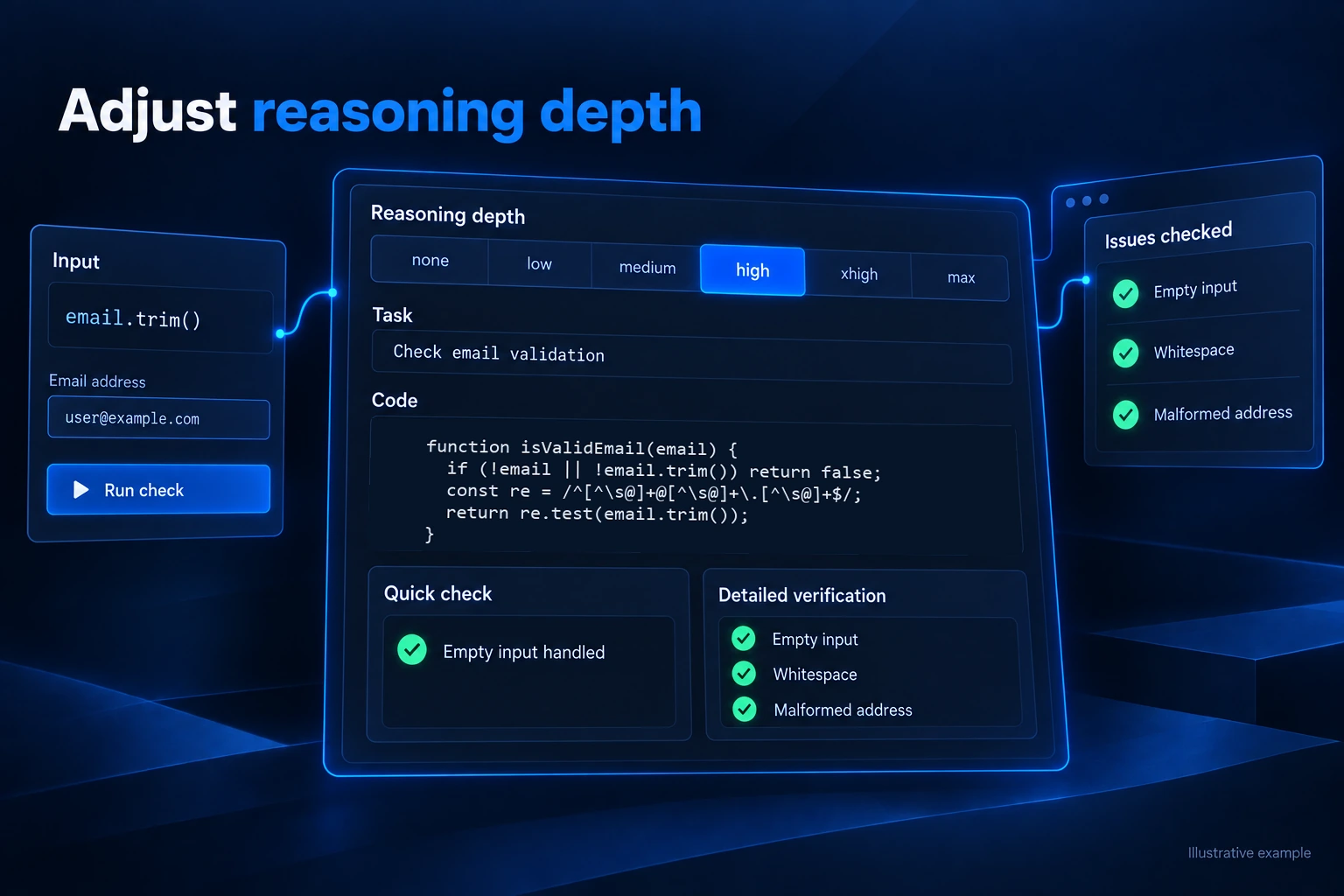
Production systems require different tradeoffs between rapid response latency and deep analytical verification, while reasoning hallucinations create severe compliance risks. GPT-6 Sol provides six configurable reasoning levels from none to max, paired with architecture improvements that reduce factual errors by up to 50%. Applications can dynamically adjust computational effort to match task complexity while maintaining dependable accuracy.

  • Configure six reasoning effort levels from none to max
  • Cut factual errors and hallucinations by up to 50%
  • Adapt latency and reasoning power to each specific task
Six reasoning-effort settings with a concise result and deeper verification of the same task

Who Can Benefit from GPT-6 Sol API?

01

Software Engineering Teams

Accelerate development cycles with autonomous coding agents that perform repository-wide refactoring, complex bug diagnosis, test generation, and pull request reviews with minimal hallucinations.

02

Autonomous Agent Developers

Construct long-horizon agents that leverage the Responses API, asynchronous tool execution, and state persistence to handle multi-step operational tasks without degrading reasoning accuracy.

03

Enterprise Workflow Builders

Automate high-value business processes across CRM, ERP, and internal databases, combining document analysis, multi-modal verification, and structured data synthesis.

04

Quantitative & Research Teams

Synthesize massive research libraries, analyze scientific papers, test hypotheses, and execute analytical Python code over 1.05M-token contexts.

05

Technical Product Teams

Rapidly prototype full-stack applications, generate production-ready UI components from design mockups, and run automated end-to-end user journey validations.

06

SaaS & Platform Integrators

Integrate frontier-level reasoning into consumer-facing SaaS products with predictable latency, high throughput, and 50% lower operational token costs.

GPT-6 Sol vs GPT-5.6 Sol vs GPT-6 Astra — Model Comparison

GPT-6 Sol delivers frontier coding and agent capabilities with 50% lower API pricing and 2–3x faster processing, making production reasoning affordable and scalable.

CapabilityGPT-6 SolGPT-5.6 SolGPT-6 Astra
Family PositioningHigh-performance cost-optimized frontier modelPrevious-generation flagship reasoning modelTop-tier maximum-capability frontier model
Context Window1,050,000 tokens1,050,000 tokens1,050,000 tokens
Max Output Tokens128,000 tokens128,000 tokens128,000 tokens
Reasoning Effort Tiersnone, low, medium, high, xhigh, maxlow, medium, high, maxlow, medium, high, xhigh, max
DeepSWE v1.1 Benchmark68.8% at max effort54.2% baseline71.4% top-tier
AutomationBench Score33.2% at xhigh effort24.8% baseline36.5% top-tier
Input Price (Short Context)$2.00 / 1M tokens (-50%)$4.00 / 1M tokens$8.00 / 1M tokens
Output Price (Short Context)$10.00 / 1M tokens (-50%)$20.00 / 1M tokens$40.00 / 1M tokens
Prompt Cache Read Discount90% off ($0.20 / 1M)80% off ($0.80 / 1M)90% off ($0.80 / 1M)
Inference Throughput2–3x faster than GPT-5.6 SolBaseline throughputUltra-deep reasoning throughput

Benchmark and pricing data reflect OpenAI official releases and technical documentation as of September 2026. PoYo offers unified access with pay-as-you-go billing.

How to Integrate GPT-6 Sol API on PoYo

Step 1: Register & Create API Key
Sign up on PoYo and generate your universal API key in seconds with zero onboarding friction.
Create API Key →

Step 2: Top Up Credits
Add credits to your account. Enjoy transparent pay-as-you-go billing with 90% prompt caching discounts.
Add Credits →

Step 3: Integrate GPT-6 Sol
Call Chat Completions or the Responses API using model ID gpt-6-sol via official OpenAI SDKs or PoYo endpoints.
View Documentation →

Frequently Asked Questions about GPT-6 Sol API

What is GPT-6 Sol and where does it fit in the GPT-6 lineup?

GPT-6 Sol is OpenAI's cost-optimized frontier reasoning model released on September 22, 2026. In the GPT-6 hierarchy, Sol sits between the top-tier GPT-6 Astra and the high-volume GPT-6 Luna, providing high-end coding and agent capabilities at half the cost of previous-generation frontier models.

How does GPT-6 Sol compare with GPT-5.6 Sol?

GPT-6 Sol delivers 50% lower API pricing, 2–3x faster token throughput, and requires 30–50% fewer tokens to complete equivalent complex tasks. It also features up to a 50% reduction in factual hallucination rates and improved prompt caching efficiency.

What is the context window and output token limit?

GPT-6 Sol offers a total context window of 1,050,000 tokens (approximately 922,000 input tokens and 128,000 maximum output tokens), enabling full repository inspection, deep document synthesis, and extended agent loops.

Does GPT-6 Sol support tool calling and agent frameworks?

Yes. GPT-6 Sol offers comprehensive support for function calling, structured outputs, streaming, and the new OpenAI Responses API (/v1/responses) designed for stateful multi-turn autonomous agents.

Which reasoning effort levels can be configured?

GPT-6 Sol supports six reasoning levels: none, low, medium (default), high, xhigh, and max. Developers can adjust reasoning depth to balance speed and analytical rigor depending on task requirements.

How does GPT-6 Sol perform on standard benchmarks?

On software engineering benchmarks, GPT-6 Sol achieves 68.8% on DeepSWE v1.1 at max effort. On autonomous agent evaluations, it scores 33.2% on AutomationBench at xhigh effort, outperforming GPT-5.6 Sol by substantial margins.

How will prompt caching work with GPT-6 Sol on PoYo?

GPT-6 Sol supports explicit breakpoint prompt caching. Cached token reads receive a 90% discount ($0.20 per 1M tokens compared to standard $2.00 per 1M), drastically lowering operational costs for repetitive context.

When will GPT-6 Sol be available on PoYo?

GPT-6 Sol is currently in the Coming Soon preparation phase. Once OpenAI completes rollout to third-party endpoints, PoYo will provide day-0 unified API access with competitive billing, dedicated routing, and comprehensive documentation.

Why Follow the GPT-6 Sol API on PoYo

01

Frontier Coding & High-Speed Reasoning

Explore benchmark-leading coding on DeepSWE v1.1, 2–3x faster token throughput, and 30–50% fewer tokens consumed on repository-scale tasks in one focused overview.

02

Responses-First Agent Workflows

Review persistent state, async tool calling, and AutomationBench performance in a unified framework tailored for autonomous multi-turn systems.

03

1.05M Context with Vision Understanding

Evaluate 1,050,000-token context windows and multimodal image understanding across large codebases, technical manuals, and architectural diagrams.

04

Plan a Clear Path to Production

Map how GPT-6 Sol's 50% price reduction and prompt caching discounts translate into scalable, cost-optimized production deployments on PoYo.