Model icon
claude-sonnet-5
Chat
Model:
Claude Sonnet 5 supports agentic coding, long-running agents, browser and computer use, professional workflows, 1M context, and up to 128K output.
Chat

This Playground is for demo purposes. Data is only valid in the current window and will be cleared on refresh.

Type a message...

Configuration
1.0
1.0
Pricing details

Transparent pricing with no hidden fees. Pay as you go.

Anthropicclaude-sonnet-5
Input
PoYo price
$0.850/1M tokens
170 credits
Official price
$2.00/1M tokens
Official
You save
57%
Anthropicclaude-sonnet-5
Output
PoYo price
$4.28/1M tokens
855 credits
Official price
$10.00/1M tokens
Official
You save
57%

* Actual fees are based on the final output.

Introduction

Complete guide to using Claude Sonnet 5 API

Claude Sonnet 5 API

Claude Sonnet 5 is Anthropic's newest Sonnet model for agentic coding, long-running agents, browser and computer use, and professional knowledge work. Use it through PoYo with OpenAI-compatible chat completions or Anthropic-native Messages API endpoints.

Claude Sonnet 5 model access

01

Claude Sonnet 5

Use model ID claude-sonnet-5. Anthropic describes Sonnet 5 as the best combination of speed and intelligence, with strong coding and agentic workflow performance.

View Documentation

Key Features of Claude Sonnet 5 API

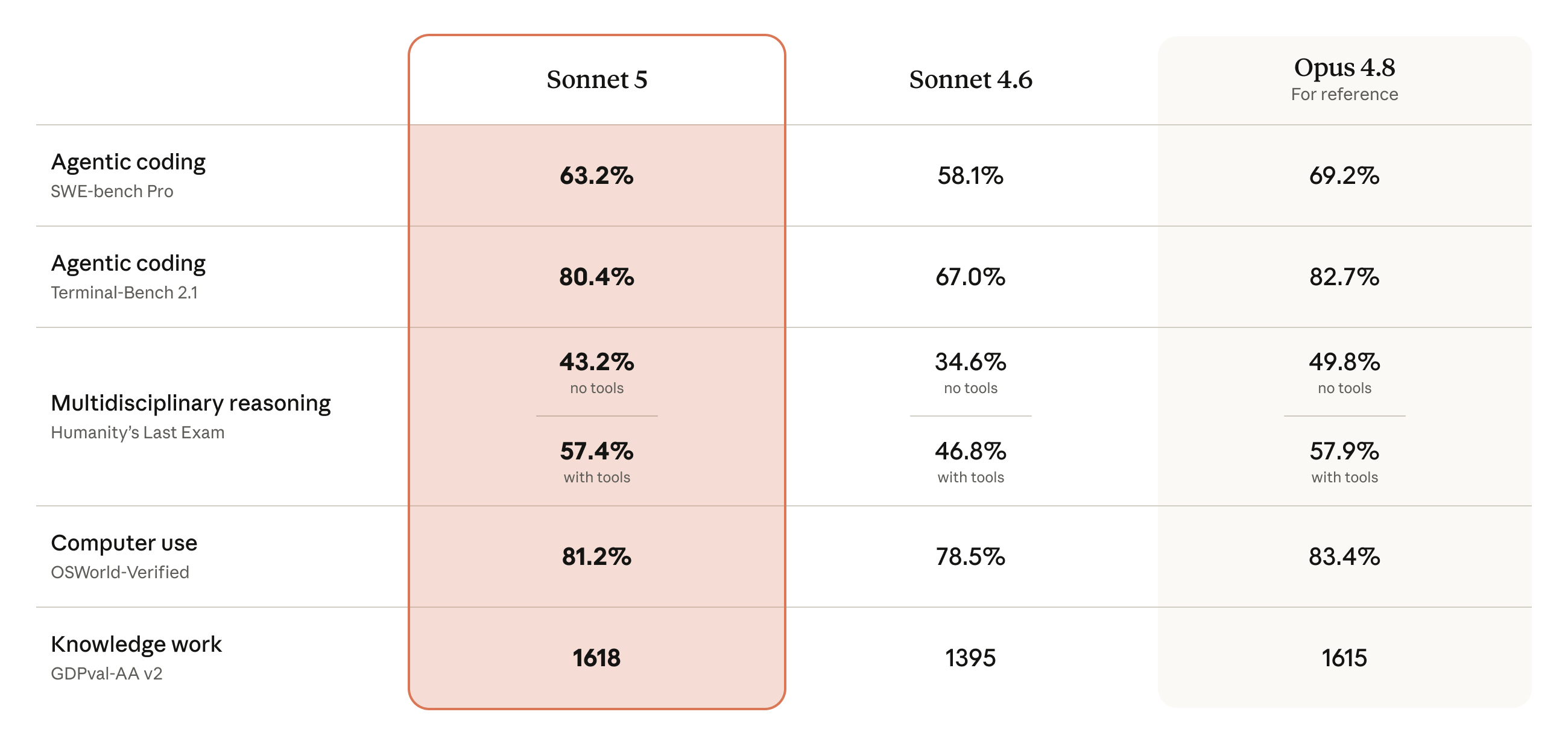
Official Anthropic materials position Sonnet 5 as a strict upgrade over Sonnet 4.6 for coding, agents, computer use, and cost-performance flexibility.

01

More agentic Sonnet model

Anthropic says Claude Sonnet 5 is its most agentic Sonnet model yet. It is designed to plan, use tools, debug, drive browsers and terminals, and finish multi-step work where earlier Sonnet models could stop short.

  • Built for multi-step software engineering work
  • Stronger follow-through for long-running agents
  • Useful for browser and computer-use automation

02

1M context and 128K output

The current Claude model overview lists Claude Sonnet 5 with a 1M token context window and up to 128K output tokens on the synchronous Messages API. Message Batches can support larger output with the documented beta header.

  • 1M token context window
  • Up to 128K max output tokens
  • Text and image input, text output, multilingual and vision support

03

Adaptive thinking with effort control

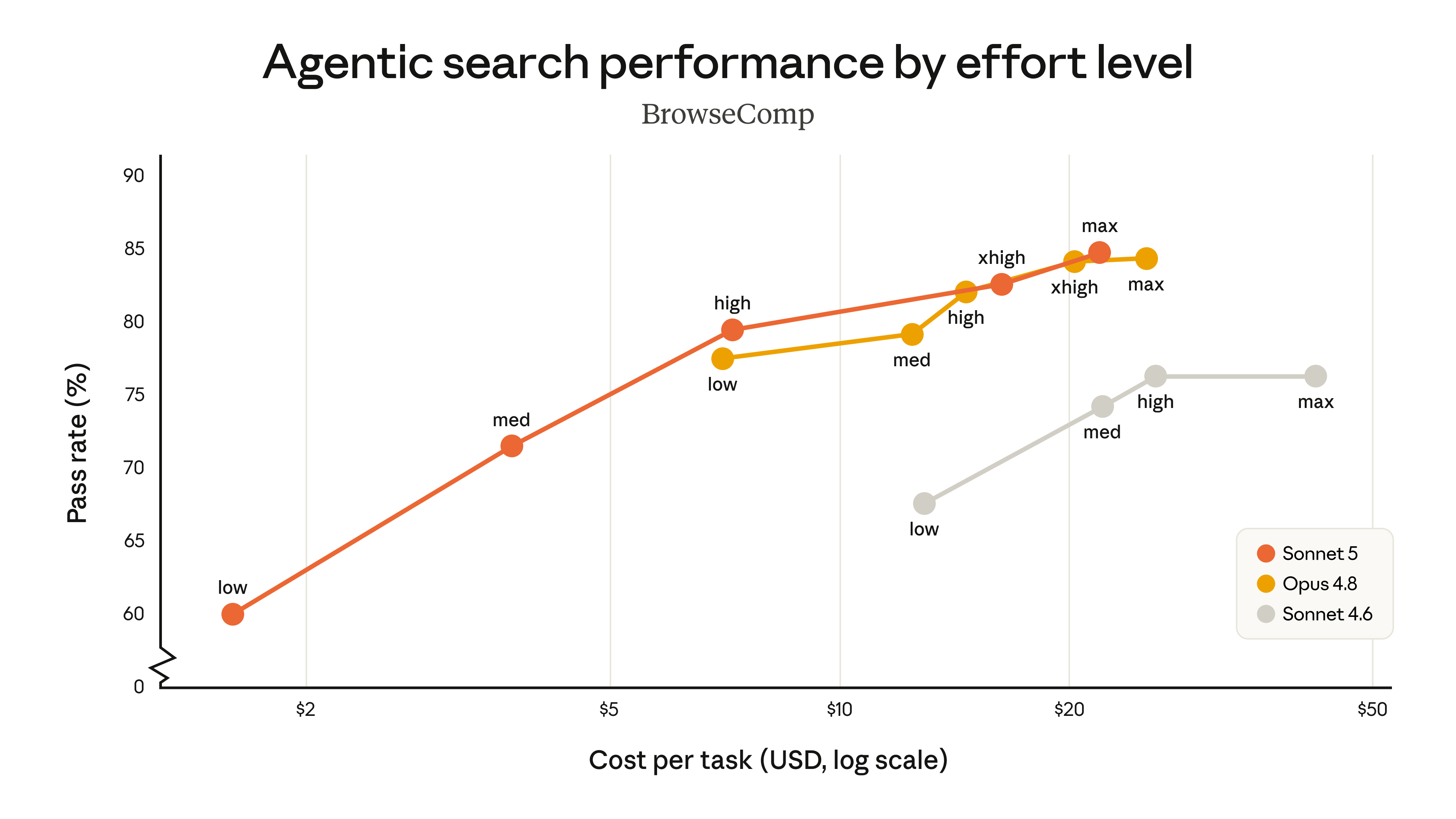
Claude Sonnet 5 uses adaptive thinking and the effort parameter instead of manual extended-thinking budgets. On the Claude API and Claude Code, Anthropic documents the default effort as high.

  • Adaptive thinking support
  • Manual extended thinking budgets are not supported
  • Set effort explicitly when you need a different latency and quality tradeoff

04

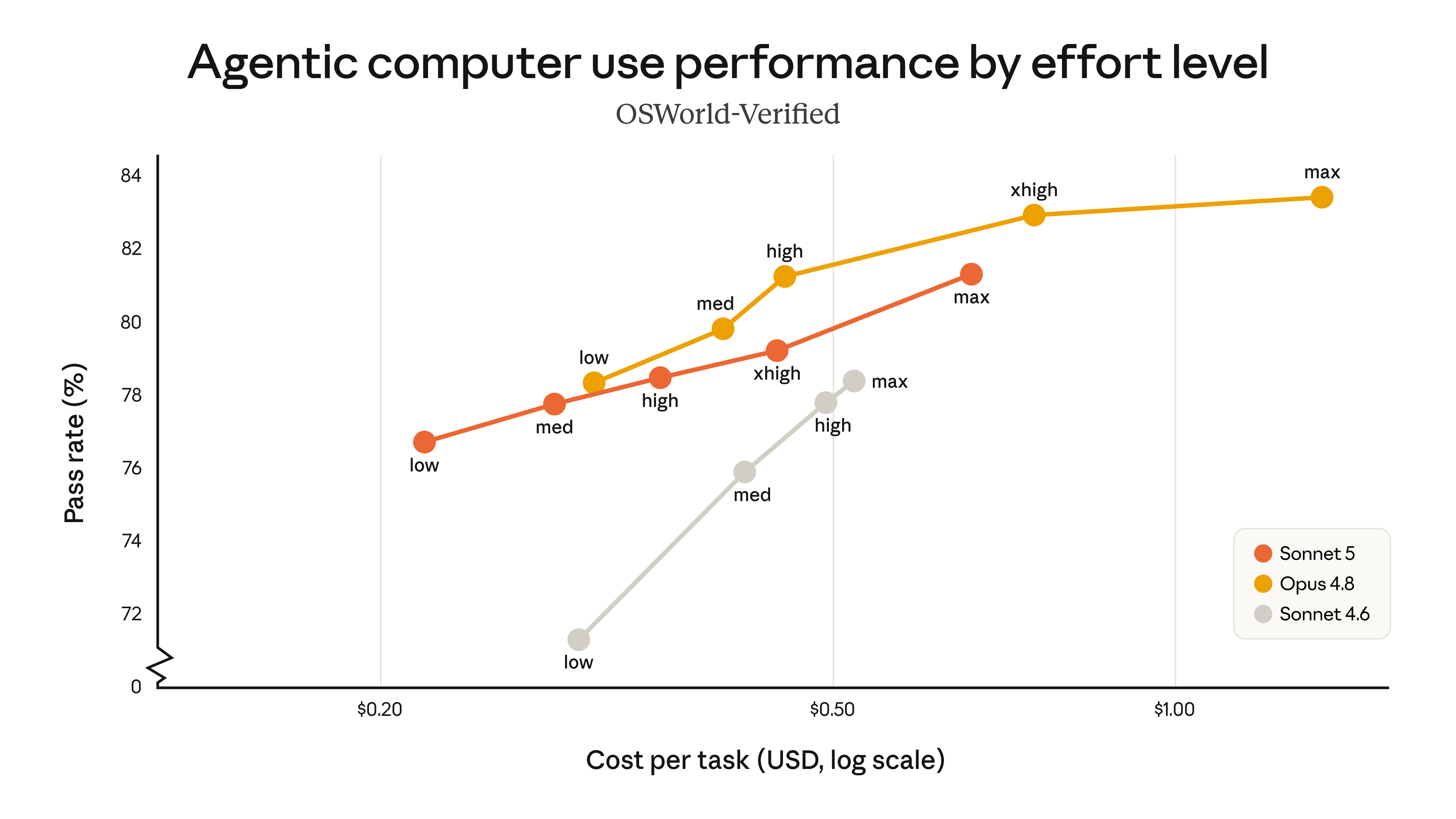
Stronger computer-use workflows

Anthropic highlights browser and computer-use performance as a key Sonnet 5 improvement. For production migration, note that Claude Sonnet 5 also uses a new tokenizer, so the same text may produce about 30% more tokens than Sonnet 4.6.

  • Improved agentic computer-use performance
  • Recount prompts against Claude Sonnet 5 when migrating
  • Review output limits near your expected response length

05

Real-time cybersecurity safeguards

Claude Sonnet 5 is documented as the first Sonnet-tier model with real-time cybersecurity safeguards. Some prohibited or high-risk cybersecurity requests may return a successful response with stop_reason: "refusal".

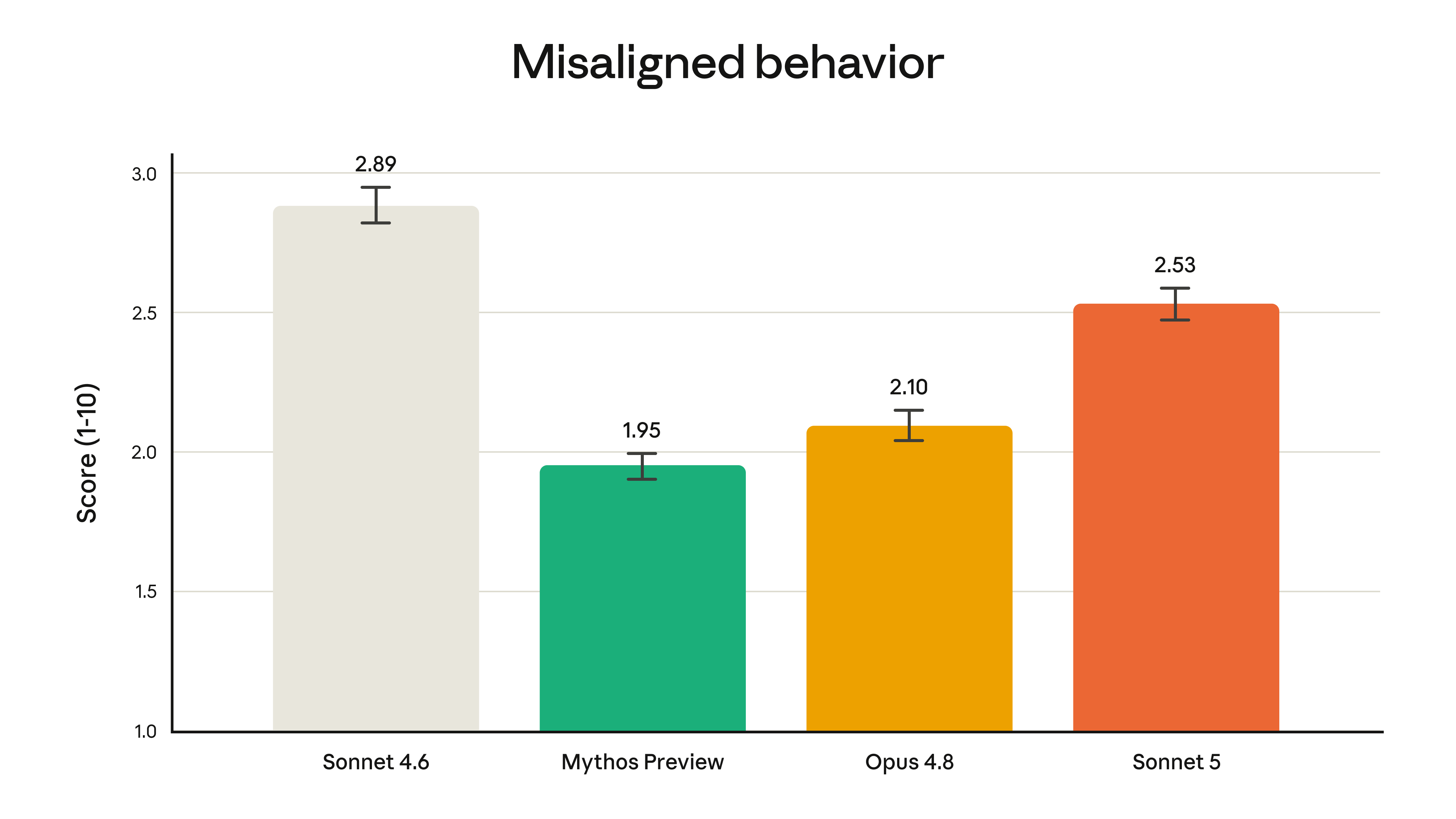
  • Improved refusal behavior for malicious requests
  • Better resistance to prompt-injection hijacking in Anthropic evaluations
  • Lower hallucination and sycophancy rates than Sonnet 4.6 in Anthropic reporting

Best use cases for Claude Sonnet 5 API

01

Advanced coding

Use Claude Sonnet 5 for planning, implementation, debugging, maintenance, multi-file refactors, code review, and repository-scale assistant workflows.

02

Long-running agents

Build agents that select tools, recover from errors, check their own output, and keep working through complex multi-step tasks.

03

Browser and computer use

Automate browser-based research, procurement, customer onboarding, data entry, and operational workflows that need reliable action-taking.

04

Enterprise knowledge work

Analyze financial data, synthesize internal and external sources, draft documents, edit spreadsheets, and support high-volume professional workflows.

Claude Sonnet 5 vs Claude Sonnet 4.6

Claude Sonnet 5 is a drop-in model ID upgrade from Sonnet 4.6, but Anthropic documents several behavior and migration notes around adaptive thinking, sampling parameters, and token counting.

FeatureClaude Sonnet 5Claude Sonnet 4.6
Model IDclaude-sonnet-5claude-sonnet-4-6
Launch dateJune 30, 2026Earlier Claude 4.6 generation
PositioningBest combination of speed and intelligence, stronger agentic codingPrevious Sonnet model for coding and agent workflows
Context window1M tokens1M tokens
Max output128K tokens128K tokens
Thinking modeAdaptive thinking with effort parameterAdaptive thinking; manual extended thinking deprecated
PoYo pricingInput 170 credits / 1M tokens (about $0.850), output 855 credits / 1M tokens (about $4.275)Existing Claude 4.6 pricing varies by Sonnet and Opus tier

Sources: Anthropic launch post and Claude Platform model documentation published June 30, 2026.

How to use Claude Sonnet 5 API

Create a PoYo API key
Get API Key

Set the model ID
Use claude-sonnet-5 as the model ID in your request.

Choose one of two endpoints
Use the OpenAI-compatible endpoint /v1/chat/completions, or use the Anthropic-native endpoint /v1/messages. Both follow the same Claude model ID.

Open API docs
View API docs

Claude Sonnet 5 API pricing

ModelInputOutput
Claude Sonnet 5170 credits / 1M tokens
about $0.850
855 credits / 1M tokens
about $4.275

High-tier top-ups include +10% bonus credits. Effective pricing is approximately 10% lower than the above rates.

Claude Sonnet 5 API FAQ

What model ID should I use?

Use claude-sonnet-5.

Which endpoints are available on PoYo?

Use /v1/chat/completions for OpenAI-compatible chat requests or /v1/messages for Anthropic-native Messages API requests.

Does Claude Sonnet 5 support 1M context?

Yes. Anthropic's current model overview lists Claude Sonnet 5 with a 1M token context window.

What changed from Claude Sonnet 4.6?

Anthropic documents stronger coding and agentic capabilities, adaptive thinking through the effort parameter, a new tokenizer, and real-time cybersecurity safeguards.