GROK 4.7 · COMING SOON

Frontier agentic coding, multi-hour knowledge workflows, and 256K long-context reasoning

Grok 4.7 API: Frontier Agentic Coding and Knowledge Work

Grok 4.7 is SpaceXAI's (xAI) next-generation frontier intelligence engineered specifically for agentic coding, terminal automation, and long-horizon professional knowledge work. Built upon a new, significantly larger foundational architecture with extensive reinforcement learning on complex multi-hour tasks, Grok 4.7 moves beyond single-prompt evaluations toward dependable execution across extended developer sessions.

Featuring native understanding of the Grok Bot harness, robust self-verification loops, and standard 256K context (expandable to 500K), Grok 4.7 will soon be accessible on PoYo via unified high-concurrency API endpoints—delivering frontier reasoning without waitlists.

Key Features of Grok 4.7 API

Autonomous terminal coding, native self-verification, and 256K long-context reasoning deliver dependable agent performance across multi-hour engineering tasks.

01

Grok 4.7 API for Autonomous Terminal & Agentic Coding

Autonomous coding agents frequently encounter friction with command line tools, test execution environments, and complex multi-step build failures. Grok 4.7 demonstrates a massive leap on agentic coding benchmarks, scoring 38.0% on Terminal-Bench 4.0 (+17.7 points over Grok 4.6) and 71.0% on DeepSWE v1.1. Developers and engineering teams can automate intricate multi-file migrations, execute end-to-end test suites, and resolve repository-scale issues with sustained fidelity.

  • Score 38.0% on Terminal-Bench 4.0 (+17.7 pts improvement)
  • Reach 71.0% on DeepSWE v1.1 for repository-scale coding
  • Drive persistent multi-step command line and coding execution
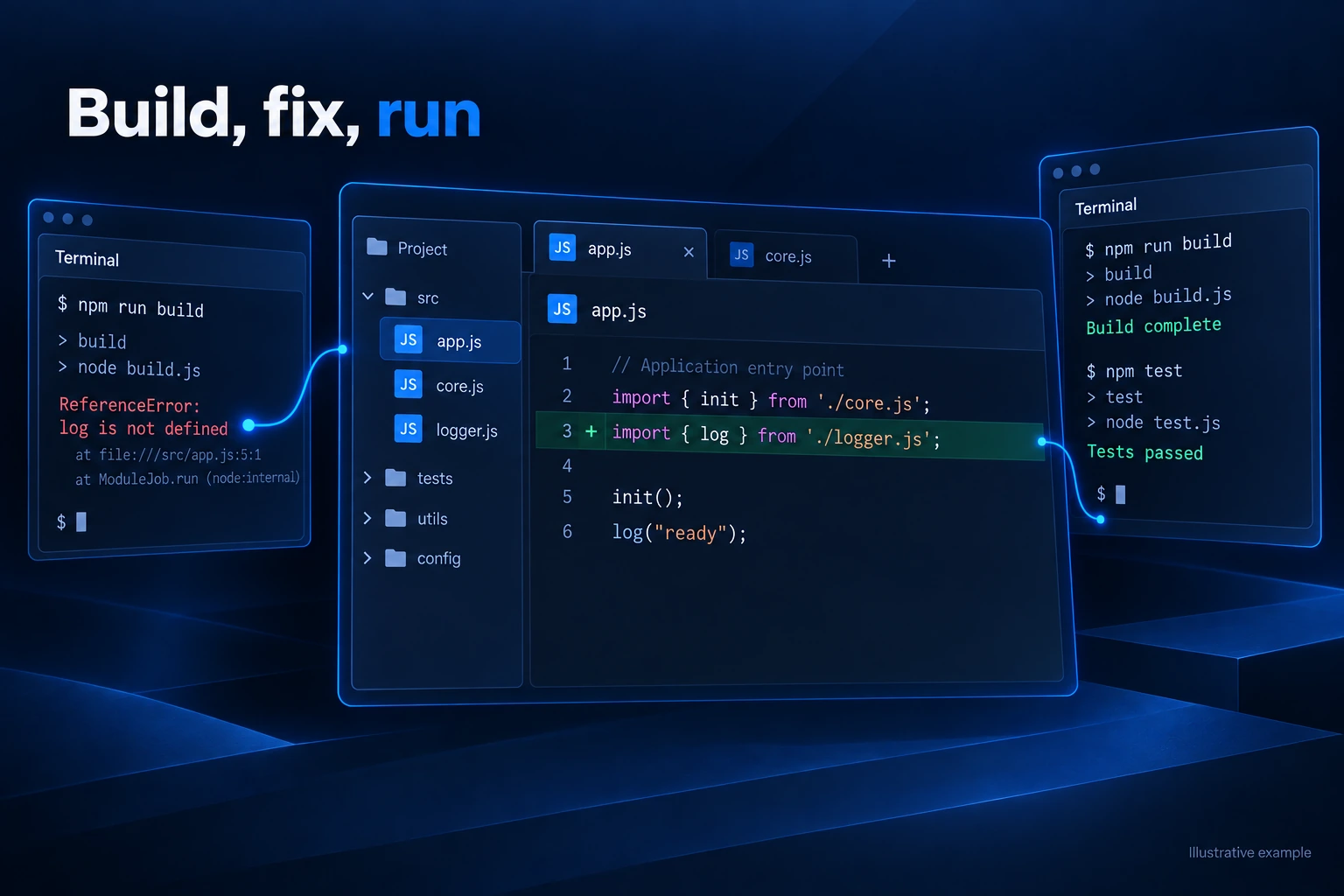
A missing-import build failure followed by the matching code patch and successful rebuild

02

Grok 4.7 API for Real-Time Self-Verification & Reliable Tasks

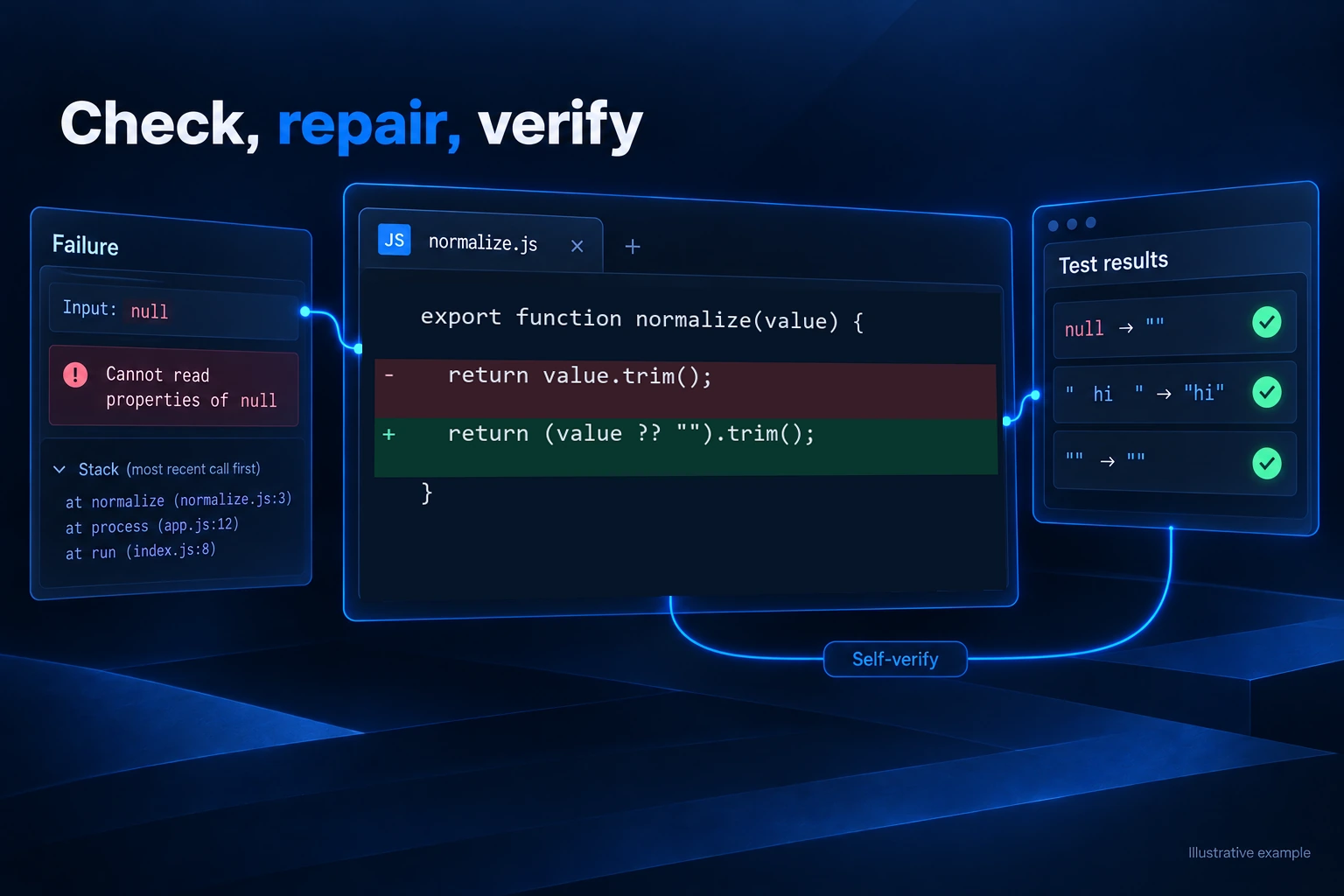
Complex reasoning pipelines often degrade over long multi-turn sessions due to compounding errors and hallucinations. Grok 4.7 integrates native self-verification mechanisms directly trained into its reinforcement learning cycle, catching and repairing its own logical defects in real time. This ensures reliable code generation and consistent multi-hour task execution without manual oversight.

  • Native self-verification loops catch errors during generation
  • Drastically reduce logical drift and compounding mistakes
  • Sustain consistent accuracy across multi-hour professional sessions
Detecting an empty-input bug, adding a guard and rerunning the related checks

03

Grok 4.7 API for Repository-Scale Codebase Analysis & Knowledge Work

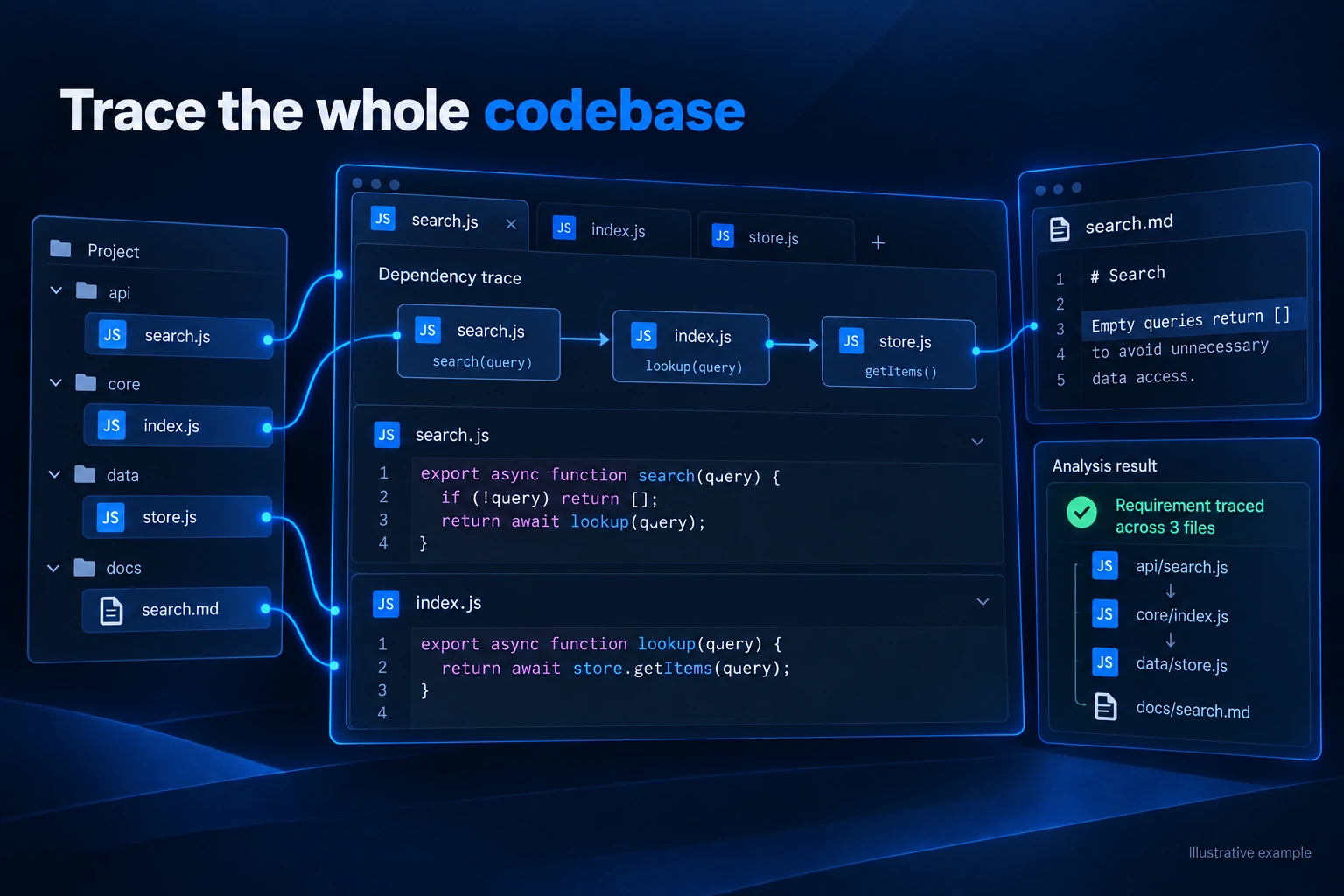
Fragmented retrieval pipelines often lose cross-file architectural dependencies when handling massive enterprise codebases or dense technical literature. Grok 4.7 provides a standard 256K token context window with support for up to 500K tokens, combined with native multimodal understanding for text, diagrams, and code. Teams can inspect full repositories, synthesize extensive documentation, and preserve complete project state in a single prompt.

  • Process up to 256,000 tokens standard, expandable to 500K
  • Maintain deep cross-file recall across massive repositories
  • Analyze complex technical documentation and schematics seamlessly
Following source-file dependencies and specification references across a repository

04

Grok 4.7 API for Native Multi-Tool Workflows & Dynamic Reasoning

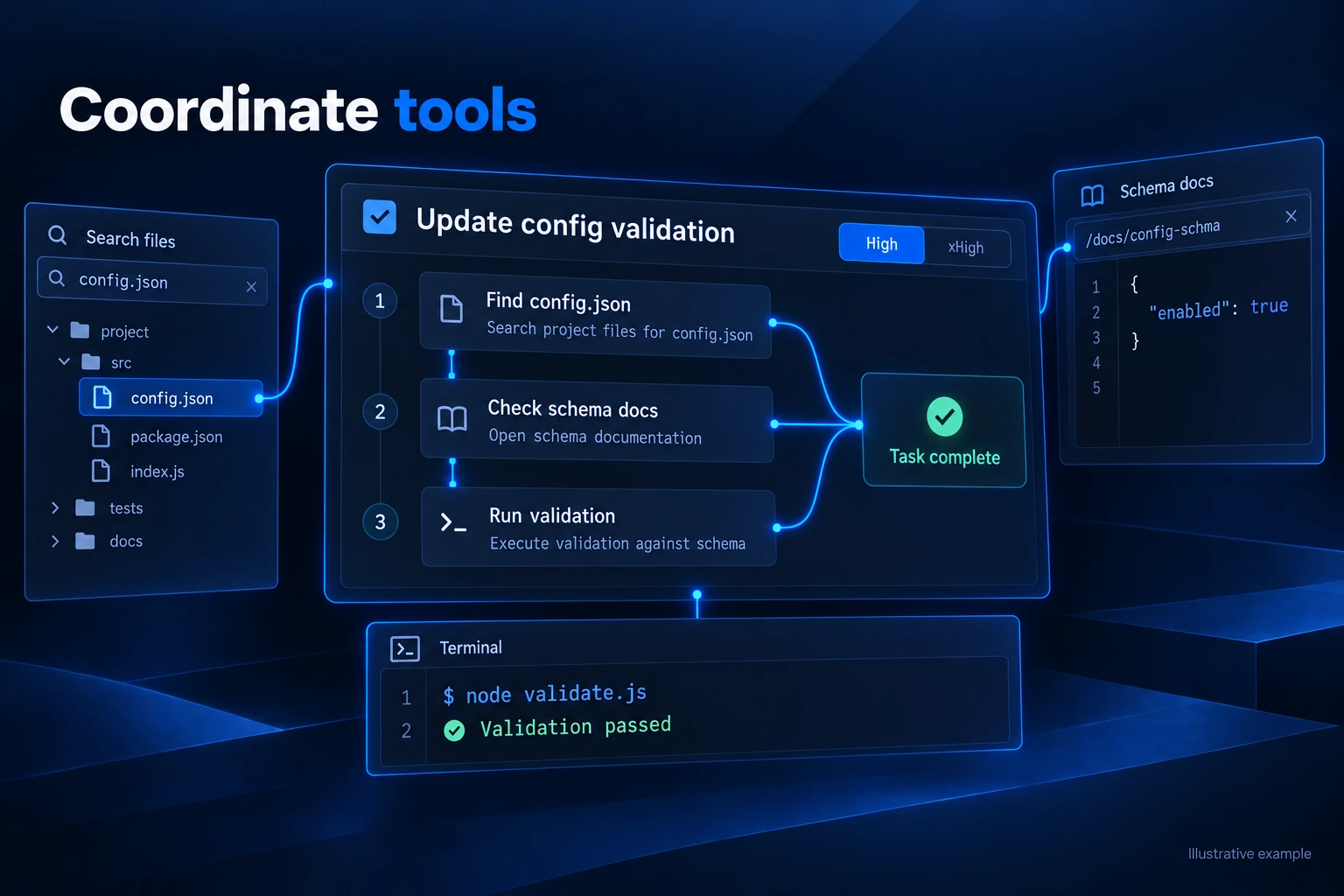
Modern agentic workflows require seamless coordination across file manipulation, web search, shell execution, and variable reasoning intensity. Grok 4.7 is natively optimized for conversational agent harnesses with built-in tool invocation. Developers can dynamically toggle between High effort (standard) and xHigh effort for maximum depth on the most challenging engineering and mathematical problems.

  • Trained natively for the Grok Bot conversational agent harness
  • Configure High (default) and xHigh reasoning effort tiers
  • Orchestrate file search, shell execution, web lookup, and code generation
Coordinating local file search, documentation lookup and shell execution with High and xHigh effort

Who Can Benefit from Grok 4.7 API?

01

Software Engineering Teams

Deploy autonomous coding agents that perform repository-wide refactoring, diagnose intricate bugs across multiple files, generate comprehensive test suites, and review pull requests with top-tier consistency.

02

Autonomous Agent Developers

Build resilient multi-turn agents that utilize native Grok Bot harness tools, file search, and self-verification to run multi-hour autonomous workflows without losing task alignment.

03

Hardware & Electrical Engineers

Leverage Grok 4.7's breakthrough 64.0% score on EEBench to review complex electrical circuit schematics, verify component specifications, and automate technical engineering calculations.

04

Legal & Technical Research Specialists

Synthesize dense regulatory frameworks, analyze multi-party contracts with Harvey Legal Agent benchmarks (19.6%), and process hundreds of pages of research in 256K context.

05

DevOps & System Automation Teams

Automate server diagnostics, deployment pipelines, and terminal operations using Grok 4.7's leading 38.0% Terminal-Bench capability to safely execute multi-step shell environments.

06

Full-Stack & Product Builders

Rapidly prototype complete applications, turn specifications into tested frontend and backend components, and validate end-to-end product features within developer environments like Cursor.

Grok 4.7 vs Grok 4.6 — Model Comparison

Grok 4.7 delivers generational leaps over Grok 4.6 in agentic coding, terminal automation, self-verification, and multi-hour session stability at the same price tier.

CapabilityGrok 4.7Grok 4.6
Architecture FoundationNew larger foundational model + extended RLGrok 4.6 baseline architecture
Context Window256K standard / up to 500K tokens128K – 256K tokens
Terminal-Bench 4.038.0% (+17.7 pts)20.3%
DeepSWE v1.1 Coding Benchmark71.0% (+5.8 pts)65.2%
EEBench (Electrical Eng.)64.0% (+11.0 pts)53.0%
Self-Verification & CorrectionNative self-verification trained via RLBasic multi-turn verification
Agent Harness IntegrationNative Grok Bot harness & tool callingStandard function calling
Reasoning ModesHigh (default) & xHigh effort tiersSingle effort tier

Benchmark metrics reflect official xAI technical releases and public evaluations as of September 2026. PoYo offers unified access with pay-as-you-go billing.

How to Integrate Grok 4.7 API on PoYo

Step 1: Register & Create API Key
Sign up on PoYo and generate your universal API key in seconds with zero onboarding friction.
Create API Key →

Step 2: Top Up Credits
Add credits to your account. Enjoy transparent pay-as-you-go billing with developer-friendly rates.
Add Credits →

Step 3: Integrate Grok 4.7
Call Chat Completions or Responses API endpoints using model ID grok-4.7 via standard OpenAI-compatible SDKs or PoYo client libraries.
View Documentation →

Frequently Asked Questions about Grok 4.7 API

What is Grok 4.7 and who developed it?

Grok 4.7 is SpaceXAI's (xAI) flagship frontier model officially released on September 21, 2026. It is optimized for long-horizon agentic coding, multi-step reasoning, terminal execution, and professional knowledge work.

How does Grok 4.7 compare to Grok 4.6?

Grok 4.7 is a generational architectural upgrade rather than an incremental patch. It features a new larger base model, extended reinforcement learning on multi-hour tasks, a massive +17.7 point increase on Terminal-Bench 4.0 (38.0%), and native self-verification mechanisms.

What is the context window for Grok 4.7?

Grok 4.7 offers a standard context window of 256,000 tokens, with an extended tier capable of processing up to 500,000 tokens for comprehensive codebase analysis and long document synthesis.

How do reasoning effort levels work (High vs xHigh)?

Grok 4.7 defaults to High effort for balanced speed and reasoning depth. For the most demanding mathematical, electrical engineering, and architectural refactoring challenges, developers can specify xHigh to allocate extended compute and deeper exploration.

What tool calling and agent capabilities are supported?

Grok 4.7 natively understands the Grok Bot harness, supporting tool execution such as workspace file search, reading/editing code, running shell commands, web searches, and structured outputs.

How does Grok 4.7 perform in coding IDEs like Cursor?

Grok 4.7 is recognized as a premier agentic coding model in Cursor and Grok Build, excelling at staying focused on complex multi-hour workflows, automated test verification, and persistent bug fixes.

Does Grok 4.7 support multimodal inputs?

Yes. Grok 4.7 supports text and image inputs (vision), allowing developers to pass architecture diagrams, UI mockups, and schematics alongside instructions.

When will Grok 4.7 be available on PoYo?

Grok 4.7 is currently in the Coming Soon preparation phase on PoYo. As xAI finalizes global third-party routing, PoYo will provide unified, high-concurrency API access with zero waitlists.

Why Use PoYo for Grok 4.7 API Access

01

Frontier Agentic Coding Intelligence

Gain early insights and rapid access to Grok 4.7's leading Terminal-Bench 4.0 and DeepSWE benchmarks designed for high-end autonomous developer workflows.

02

Unified API & High Concurrency

Integrate Grok 4.7 alongside models from OpenAI, Anthropic, and Google with a single API key, OpenAI-compatible syntax, and enterprise-grade uptime.

03

256K Context & Multi-Tool Coordination

Leverage full 256K context windows and persistent agent tool calls with optimized latency, reliable streaming, and comprehensive technical documentation.

04

Transparent Pay-As-You-Go Billing

Eliminate expensive fixed subscriptions. Top up on demand and only pay for the exact tokens consumed by your production applications.